
Speech signal analysis
Inspect duration, sample rate, bit rate, and channels. Analyze frequency response and signal-to-noise ratio to understand the recording's basic properties.

Solutions /Forensic Voiceprint Analysis
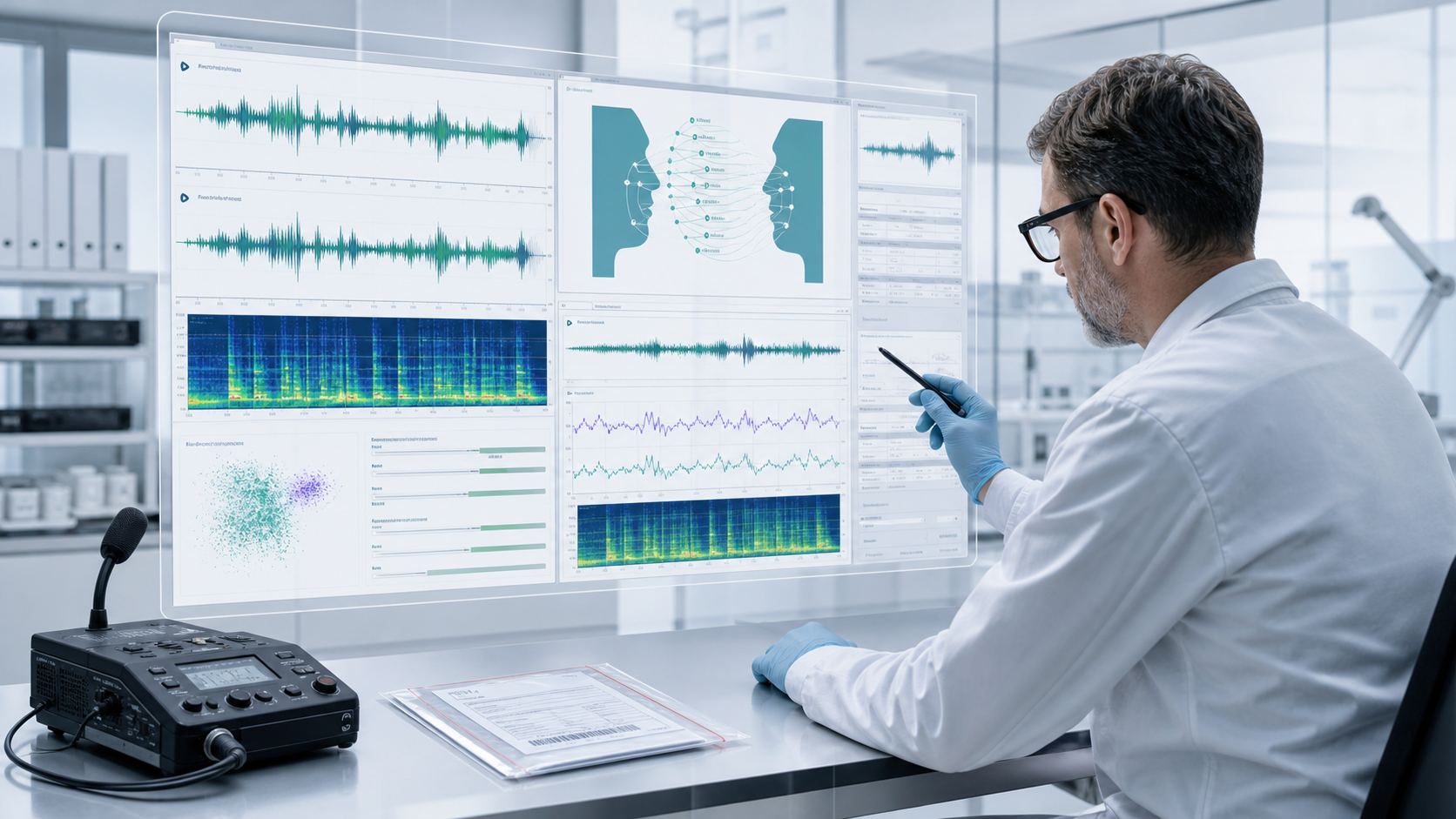
From a recording to acoustic features that can be reviewed. Combine signal analysis, speech enhancement, and voiceprint comparison to assist examination, comparison, and expert assessment.
Product features
Inspect duration, sample rate, bit rate, and channels. Analyze frequency response and signal-to-noise ratio to understand the recording's basic properties.

Use speech, acoustic, and signal analysis to investigate possible edits and support recording authenticity examination.

Compare auditory and spectral characteristics in evidence and reference samples, documenting similarities and differences to assist speaker identity assessment.

Reduce background noise and improve clarity for listening and subsequent feature analysis.

Divide multi-speaker recordings into labeled segments for individual review and comparison.

Analyze background sounds to extract acoustic clues about the recording environment for expert assessment.

Add, edit, delete, and search case records, keeping analysis connected to the relevant case.
System architecture
Assess existing examination systems, storage, and network isolation around evidence management, analysis, and comparison, then evaluate deployment and expansion.
Review business systems and integration needs
Define network conditions and isolation requirements
Evaluate capacity and expansion requirements
Advantages
Compare auditory, spectral, and voiceprint features to provide multiple perspectives for an overall assessment.
Bring signal analysis, edit detection, enhancement, and speaker comparison into one workflow.
The system assists analysis and comparison. Examiners form opinions using evidence, reference samples, and examination results.
Upgrade hardware and software as examination needs change. Confirm features and deployment scope during project evaluation.
Workflow
Determine examination methods and plans from the assignment, then prepare recordings and equipment.
Inspect acoustic parameters in matching or similar speech from evidence and reference recordings, identifying features and variations.
Compare acoustic features, record similarities and differences, and prepare comparison charts.
Examiners combine results across multiple parameters to form an expert opinion.